How to choose a property location in Malaysia: a neighbourhood checklist
Published 17 October 2026
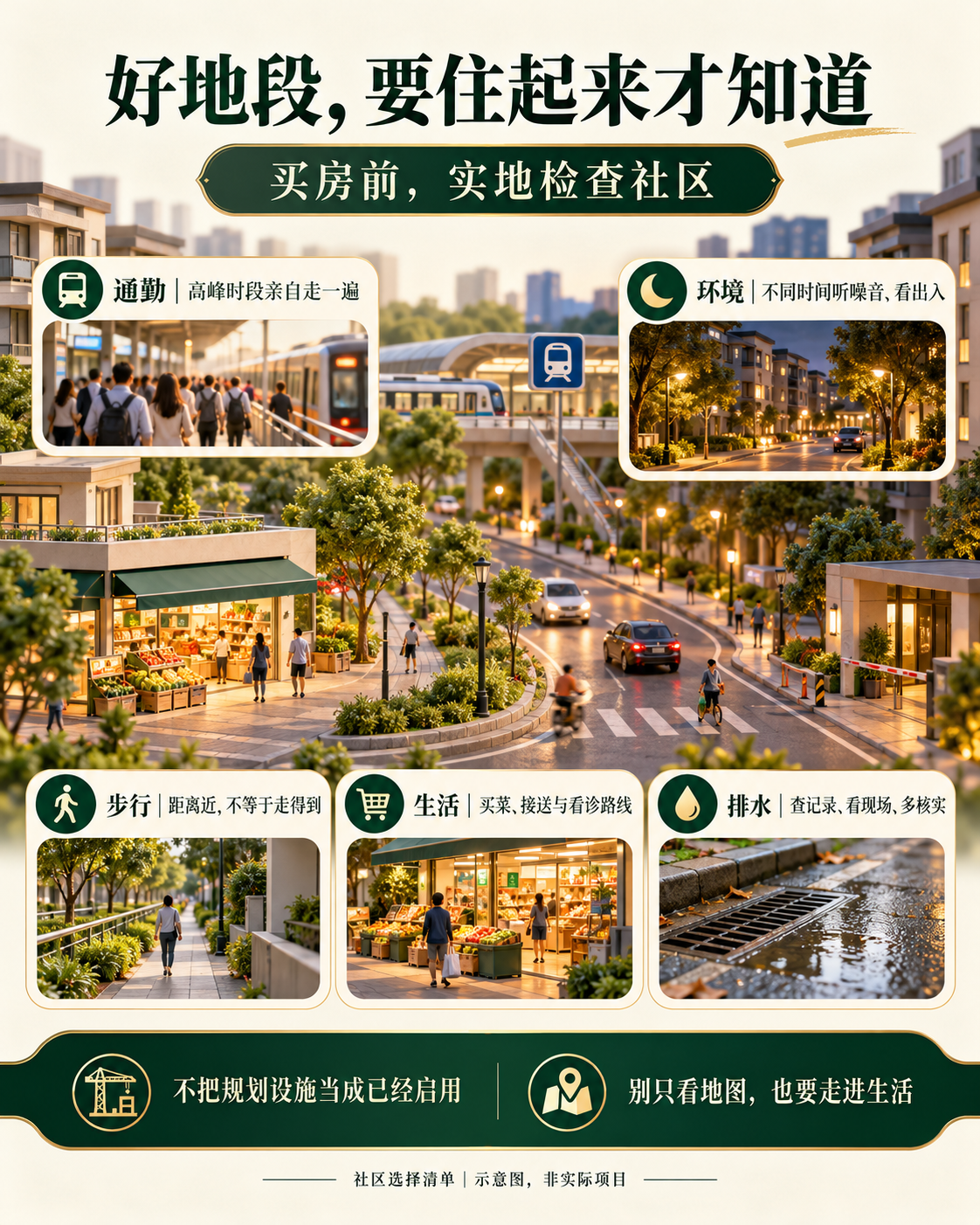
Near a station, convenient and easy access are common property descriptions. The practical question is whether the location fits your household's real routines. Travel mode, working hours, family needs and habits can change how the same neighbourhood feels. This checklist turns a broad claim about a good location into observations and questions you can verify.
1. Map your actual week
List the places you regularly need: work, school, care arrangements, groceries and medical services. Note how often each trip occurs. A route used five days a week may matter more than a shopping destination visited occasionally. Set personal priorities before comparing listings.
Ask other household members to make their own list. A driver and someone relying on walking or public transport may experience the location differently. A lift at the building does not mean the entire journey works for an older person. Include the people who will use the routes.
2. Test commuting door to door
Travel around your normal departure time and record the journey from the unit to the destination. Include leaving the car park, joining traffic, parking and walking. For public transport, include access, waiting, transfers and the final walk. Record the day and weather instead of assuming one unusually clear trip will repeat daily.
Compare alternative routes and costs where useful. A faster route may involve different toll or parking expenses, while another may better fit your routine. Navigation estimates help planning; they do not guarantee future journey times.
3. Check the real walking route
An advertised distance might be measured in a straight line or from the development boundary. Ask about the start and end points, then walk from the actual residential entrance to the actual station or facility entrance. Look at pavements, crossings, lighting, shelter and whether any section crosses private land or has opening restrictions.
Consider carrying groceries, using a stroller or needing a mobility aid. A fit adult walking empty-handed does not represent everyone's experience. Record proposed or unfinished connections separately from routes already open.
4. Test everyday amenities
Try linking collection, shopping and care errands into a realistic trip. A nearby mall may not be the easiest grocery option, and a mapped school does not establish admission eligibility. Confirm current operations, services, access and relevant conditions directly with the institution. Do not promise places or particular services from a map listing.
5. Observe at different times
For a serious candidate, revisit accessible areas at different times where practical. Note traffic sound, commercial activity, smells and access arrangements, including location and duration. Ask further about temporary construction versus lasting conditions rather than making an absolute judgement from one visit.
Use safe open routes and suitable company at night. Gates, guards or cameras can be observed, but do not prove an area is risk-free. Personal comments also are not verified crime statistics.
6. Check drainage information carefully
Combine visible conditions, past records and enquiries to relevant parties. JPS Public Infobanjir provides rainfall and water-level monitoring that can help explain current conditions. A monitoring station is not an assessment of every home, and no current alert does not establish no historical or future flooding risk.
For material concerns, consult the relevant local authority or suitable professional. Check whether accounts refer to the same location, year and event. Never enter dangerous weather or floodwater to inspect drainage, and avoid unverified claims that an area never or always floods.
Separate today's facilities from future plans
Keep one column for usable facilities and another for proposals, approvals or construction. Verify status, scope and timing; do not turn rumours into promised amenities or guaranteed appreciation. Compare the location with budget and home condition, and list unresolved questions before committing.
Contact us with your travel method, household needs and preferred area to organise a viewing route. This guide makes no guarantees about traffic, safety, flood risk, future development or investment results.
Source: JPS Public Infobanjir. Routes and checklists are editorial guidance, not a unit-specific risk assessment.