Maintenance fee vs sinking fund: three questions before buying a condominium
Published 17 October 2026
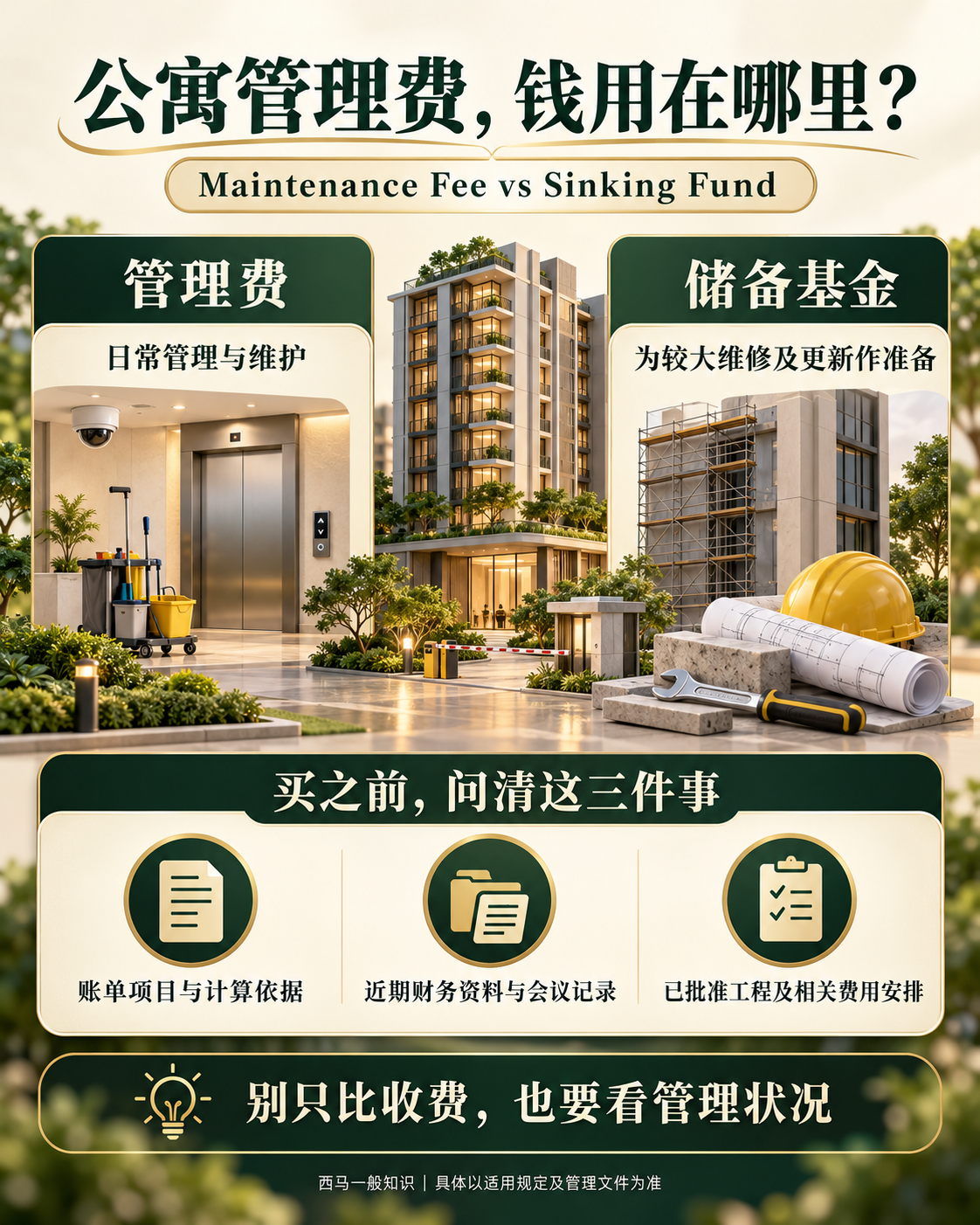
When viewing a condominium, a quoted monthly figure may not explain whether the sinking fund is included or whether other approved spending exists. Understand the bill and inspect common areas before comparing long-term costs. This guide uses the general strata-management context in Peninsular Malaysia; it does not calculate charges or determine responsibility for a particular unit.
Understand the purposes
Maintenance charges primarily support ordinary management and maintenance. The sinking fund provides for qualifying capital expenses, such as larger renewal or improvement work, under applicable requirements. Actual permitted uses, contributions and management authority depend on the rules, management stage and valid documents. KPKT provides official public resources covering strata law, financial information and maintenance.
You do not need to interpret every account at your first viewing. Start with an actual bill for the candidate unit and identify what remains unclear. Mark estimates and oral statements accordingly rather than treating them as confirmed arrangements.
1. Ask about the bill and its basis
Ask how maintenance charges, sinking-fund contributions and other items appear on the bill, which period the figure covers, whether it is current and how it is calculated. Do not assume an online rate multiplied by floor area is your formal bill.
Separate a bundled total into its components before comparing two homes. One quotation might omit an item included in another. Also ask about payment dates, advance payments and other applicable costs so you can prepare cash accurately. No universal percentage or formula is supplied here.
2. Learn about actual management
Observe lifts, corridors, parking, refuse areas and facility availability. Ask about visible maintenance matters and follow-up arrangements. Those observations help formulate questions; they do not certify financial health, equipment compliance or legal performance.
Through the seller or an appropriate channel, ask what recent financial information, meeting records and repair information can be obtained, and confirm the scope you are entitled to access. A visitor should not assume unrestricted access to every document or residents' personal payment information. If material information is unavailable, ask why and seek legal guidance on what must be resolved before purchase.
3. Clarify approved works and costs
If significant works are proposed or approved, ask about their scope, status, budget information and funding arrangements. Separate a general discussion from a formal approval or work already started. A statement that something will be repaired does not explain which stage it has reached.
Also check outstanding unit-related charges and how the transaction documents treat approved expenditure and responsibilities around completion. Do not assume every cost belongs to either buyer or seller. Ask your lawyer to explain the applicable position and written agreement before delivery.
Compare with consistent evidence
Use a table for bill items and dates, common-area observations, obtainable records and unanswered questions. A clean lift is an observation; a replacement history needs supporting information; a promise of no future major expense cannot be guaranteed.
Your use of facilities can inform your choice, but not using a facility does not by itself establish that related applicable charges can be ignored. Questions about obligations and disputes should follow formal channels rather than a decision to stop paying based on this article.
Common questions
Are lower charges always better? Compare service scope, facilities, condition and known works together. Price alone guarantees nothing about management quality.
Does a large sinking-fund balance remove future concerns? No. Consider its date, approved purposes, project scope and other arrangements, rather than one figure.
Is the seller's assurance of no arrears enough? Seek appropriate confirmation from management and ask your lawyer how the transaction should address it.
Contact us to organise management questions for your next viewing. Verify current requirements and documents; Sabah and Sarawak should not automatically use this Peninsular Malaysia explanation.
Sources: KPKT strata information, KPKT Strata Handbook 2.0, page 14.