Subsale home viewing checklist in Malaysia: five things beyond the renovation
Published 17 October 2026
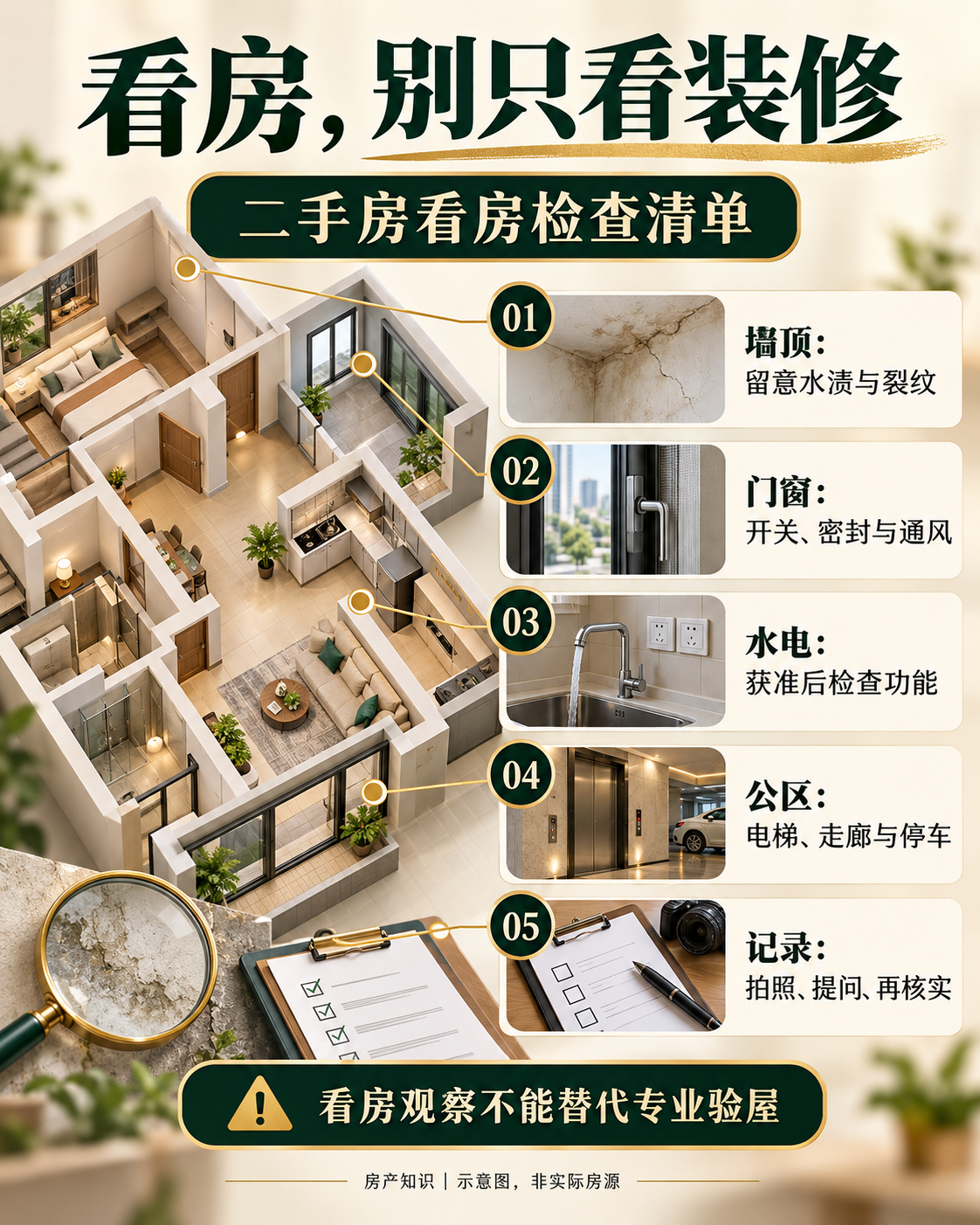
A beautifully furnished home can make a strong first impression. For a subsale purchase, also examine the visible condition, ask about past repairs and record unanswered questions. This checklist helps organise a normal viewing. It is not a professional inspection or a structural, electrical or waterproofing assessment.
Prepare the visit
Ask whether the home is occupied, utilities are connected, and photographs or basic functional observations are permitted. Respect residents' privacy. Do not open personal cupboards, move furniture or photograph belongings without consent. Record the date, weather and viewing time so you can compare visits fairly. Revisit a serious candidate to investigate outstanding questions rather than simply repeat the same tour.
1. Walls and ceilings
Look at accessible corners, window edges and areas near visible pipes for stains, peeling paint, mould or cracks. If there is patching or fresh paint, ask what work was done, when and whether records are available. Fresh paint alone proves neither a hidden defect nor a successful repair.
Record a crack's location and appearance without declaring it harmless or dangerous. Ask who examined it, what action was taken and whether it recurred. Where an issue could affect your decision, obtain an appropriate professional assessment instead of relying on a casual reassurance.
2. Doors, windows, daylight and ventilation
With permission, try normal opening and closing. Observe frames, seals, airflow, noise and odours. Do not lean on unstable railings, climb or reach outside to inspect inaccessible areas. One bright afternoon cannot represent comfort throughout the year. Check usable dimensions against your own furniture and needs rather than relying only on wide-angle photographs.
3. Water, electricity and drainage
Where utilities are available and conditions are safe, observe existing lights, switches, taps and drainage with permission. Ask whether other equipment was operating during the observation. A tap working briefly does not prove every pipe or every period of water pressure is satisfactory.
Do not dismantle sockets, open electrical panels, touch exposed wiring or conduct extensive water tests during an ordinary viewing. Stop if there are apparent hazards and request professional advice. If the home is advertised as fully renovated, ask what that description covers and what records support it.
4. Common areas and parking
For a condominium, walk from the entrance and parking area to the unit. Observe lifts, corridors, stairs and refuse areas. Consider groceries, visitors and late returns. Cleanliness does not certify fire safety or equipment compliance. Confirm parking allocation and usage against relevant documents; an available visitor space on one day does not guarantee daily availability.
5. Turn observations into questions
With consent, photograph locations and separate what you saw, the explanation given and what remains unverified. For example, record a window stain and a claimed repair date, then request the repair record and follow-up check. Distinguish matters needing inspection, quotations and legal clarification. Ask your lawyer how repair promises, included items and delivery conditions should be reflected in the transaction.
Common questions
Does a new-looking home need checking? Basic observations remain useful; hidden systems and appearance are different matters.
Can a project quality score replace an individual inspection? CIDB describes QLASSIC as a construction workmanship assessment method. Do not treat a project score as proof that every part of one unit is defect-free.
How many visits are enough? Focus on resolving material questions rather than a fixed number. Contact us to organise a viewing checklist suited to your housing needs. Actual condition and repair responsibility require separate verification.
Source: CIDB QLASSIC. The viewing sequence is editorial guidance, not an official CIDB inspection checklist or a new-home defect claim guide.